

Introduction
If you’ve ever come across a turquoise-haired virtual singer with long twin-tails, you’ve probably encountered Hatsune Miku. But what makes her so popular? Is she an anime character, a real singer, a computer program, or something entirely different?
Hatsune Miku is all of these things in a unique cultural sense. She began as singing voice software and gradually became an international virtual music icon, inspiring thousands of songs, concerts, collectibles, cosplay creations, and fan projects.
Whether you’re discovering her for the first time, looking for a Hatsune Miku figurine, wondering about her official age, or hoping to understand what happens at a Hatsune Miku concert, there’s plenty to explore.
This guide explains her origins, how her music works, why collectors love her figures, and how variations such as Sakura Miku fit into her expanding universe. It also clears up common misconceptions about her identity and separates official character information from fan interpretations.
Who Is Hatsune Miku?
Hatsune Miku is a virtual singer developed by Crypton Future Media, a Japanese music technology company.
She originally appeared as singing voice synthesis software on August 31, 2007. The software allows creators to enter lyrics and melodies and produce a synthesized singing voice.
Her name is commonly translated as “The First Sound from the Future.”
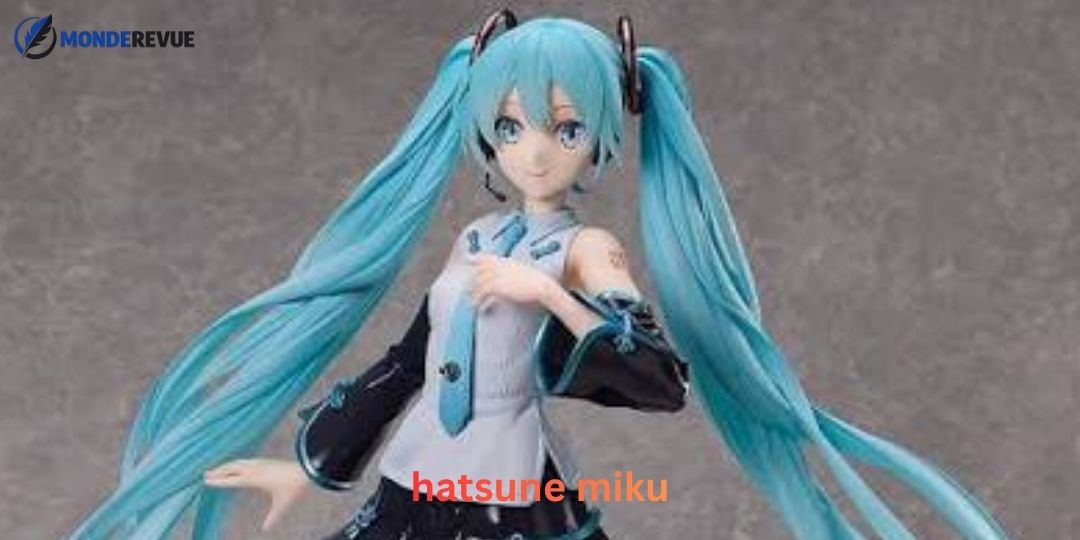
Her recognizable appearance includes:
- Long turquoise twin-tails.
- A futuristic musical outfit.
- A blue-green color scheme.
- A distinctive digital pop-star identity.
One important distinction is that Hatsune Miku isn’t a traditional anime protagonist or a human celebrity. She’s a virtual character associated with music-production technology.
Her voice is based on recordings provided by Japanese voice actress Saki Fujita.
Why Did Hatsune Miku Become So Popular?
Her success comes from something unusual: fans aren’t simply listening to an artist’s finished songs. They’re actively creating the music associated with her.
Independent musicians can compose songs using her software, publish their creations, and contribute to an enormous creative community.
This creates a continuous cycle:
- A creator produces a new song.
- Other fans discover and share it.
- Artists create their own interpretations.
- New listeners become interested in Miku.
- More creators join the community.
A unique insight: Hatsune Miku’s popularity isn’t dependent on one permanent musical identity. Different creators can give her completely different personalities through their compositions, making her musical identity remarkably flexible.
How Old Is Hatsune Miku?
One of the most frequently asked questions is about Hatsune Miku’s age.
According to her official character profile, Hatsune Miku is 16 years old.
Her official profile also includes:
- Age: 16.
- Height: 158 cm.
- Weight: 42 kg.
- Birthday: August 31.
- Preferred musical genres: J-pop and dance-pop.
These are character-profile details rather than the age and measurements of a real person.
It’s important to distinguish her character age from the history of her software.
The original Hatsune Miku software was released in 2007. That means the software and character have a much longer history than the character’s fixed age might suggest.
Her age is a character setting, not something that automatically increases every year.
Is Hatsune Miku an Anime Character?
Hatsune Miku is frequently associated with anime culture, but describing her exclusively as an anime character isn’t entirely accurate.
She originated as a singing voice synthesizer character rather than as the protagonist of a television anime.
Her popularity expanded into:
- Japanese pop culture.
- Video games.
- Animated promotional projects.
- Music collaborations.
- Collectible merchandise.
- Virtual live performances.
- Fan-created entertainment.
Her visual design is strongly influenced by Japanese character-art traditions, which explains why people often associate her with anime.
However, her central identity remains that of a virtual singer.
A useful distinction: An anime character generally begins with a specific fictional story or production. Hatsune Miku began with music technology and developed a broader identity through the creative work of her community.
What Makes a Hatsune Miku Concert Special?
A Hatsune Miku concert is different from a conventional pop concert.
Instead of a human singer performing onstage, Miku appears as a computer-generated virtual performer, typically projected onto a transparent screen or specialized display.
Live musicians often accompany her performances, creating an interesting combination of digital entertainment and traditional concert production.
<PRIVATE_PERSON>
What Happens at a Hatsune Miku Concert?
A typical concert experience can include:
- Popular Hatsune Miku songs.
- Live instrumental performances.
- Coordinated lighting and stage effects.
- Virtual character performances.
- Audience participation.
- Concert merchandise.
The setlist and production depend on the particular event.
What Is MIKU EXPO?
MIKU EXPO is an international concert tour organized by Crypton Future Media.
It introduces Hatsune Miku and the wider virtual-singer community to audiences around the world.
Some editions also include exhibitions, workshops, and other creative activities.
Another major event is Magical Mirai, which combines a virtual-singer concert with an exhibition celebrating music, technology, and fan creativity.
What Should First-Time Concert Visitors Know?
If you’re planning to attend a future event, consider these practical points:
- Check the official event schedule before making travel arrangements.
- Read the venue’s rules about permitted concert accessories.
- Check ticket categories and entry requirements.
- Arrive early enough to find your seat.
- Review the merchandise arrangements before the event.
A concert isn’t just about watching Miku perform. It’s also an opportunity to experience the community surrounding her music.
Hatsune Miku Figurines: What Should Collectors Know?
Hatsune Miku figures are among the most recognizable collectibles associated with the character.
They come in different sizes, styles, materials, and price categories.
Some reproduce her original design, while others introduce seasonal outfits, special collaborations, or alternative artistic interpretations.
Popular Types of Hatsune Miku Figures
1. Nendoroid figures
These figures are known for their compact proportions and interchangeable facial expressions.
They’re particularly appealing to collectors who enjoy character customization.
2. Scale figures
Scale figures generally offer more elaborate sculpting, detailed costumes, and carefully designed poses.
They can be attractive display pieces for dedicated collectors.
3. Prize figures
Prize figures are commonly associated with arcade prizes and affordable merchandise ranges.
They’re an accessible starting point for people building their first collection.
4. Seasonal figures
Seasonal releases feature designs inspired by particular events, weather conditions, and celebrations.
Sakura Miku and Snow Miku are especially recognizable examples.
How to Choose the Right Miku Figure
Before purchasing a Hatsune Miku figure, consider these factors:
| Factor | What to Check |
|---|---|
| Authenticity | Manufacturer and licensing information |
| Condition | Scratches, missing pieces, and packaging |
| Size | Available display space |
| Material | PVC, ABS, or other listed materials |
| Manufacturer | Established figure-producing companies |
| Edition | Standard, limited, or exclusive release |
A common collecting mistake is choosing a figure based only on its promotional appearance.
Instead, check the manufacturer, product description, and actual condition.
A unique collector insight: Display compatibility deserves attention before purchase. A large figure with an elaborate base may need considerably more shelf space than its advertised character height suggests. Measure the complete display footprint, including the base and accessories.
Sakura Miku and Hatsune Miku: What’s the Difference?
Sakura Miku is a popular variation of Hatsune Miku inspired by cherry blossoms.
While the original Miku is recognized by her turquoise twin-tails, Sakura Miku uses a softer pink-centered design.
Her appearance commonly features:
- Pink hair.
- Cherry-blossom-inspired accessories.
- Spring-themed clothing.
- Floral decorative elements.
- A pastel color palette.
The main difference is the visual theme rather than an entirely separate musical identity.
Why Is Sakura Miku So Popular?
Sakura Miku combines the recognizable character design with the cultural association between cherry blossoms and springtime in Japan.
Her seasonal appearance makes her particularly appealing for themed merchandise and collectibles.
For collectors, Sakura Miku also offers variety without moving away from the original character.
When comparing a Sakura Miku figure with a standard Hatsune Miku figure, pay attention to the specific release, manufacturer, and design edition.
Hatsune Miku Cosplay: Understanding the Character’s Style
Hatsune Miku is a popular cosplay choice because her original outfit has several recognizable features.
Her standard design typically includes:
- Turquoise twin-tails.
- A futuristic sleeveless top.
- A pleated skirt.
- Arm accessories.
- Coordinated turquoise details.
- Distinctive hair accessories.
However, cosplay doesn’t have to reproduce the original outfit exactly.
Fans often explore alternative themes, including:
- Sakura Miku.
- Snow Miku.
- Casual Miku.
- Magical Mirai-inspired outfits.
- Original fan-designed costumes.
Tips for Creating a Recognizable Miku Cosplay
Start with the elements that make her recognizable rather than trying to reproduce every tiny costume detail.
For example, the twin-tail hairstyle and turquoise color palette establish a strong connection to her original design.
Comfort is also important. Choose materials suitable for the event, make sure accessories are secure, and test the complete outfit before attending a convention.
Respecting event photography rules and other cosplayers’ boundaries is equally important.
Is Hatsune Miku Nude or Adult-Oriented Content Official?
Searches involving sexualized versions of Hatsune Miku can create confusion between official character material and unofficial fan interpretations.
The important distinction is that Hatsune Miku’s official profile identifies her as a 16-year-old character.
Her established official identity centers on music, virtual performances, creative projects, games, and merchandise.
Unofficial online interpretations should not be confused with her official character design or the material authorized by Crypton Future Media.
For anyone interested in understanding the character, her music, performances, and original creative universe provide a much more accurate picture of what makes her significant.
What Is Hatsune Miku Surprise Visitor?
The phrase “Hatsune Miku surprise visitor” can be used in different fan and entertainment contexts.
It may describe a surprise Miku-themed appearance at an event, an unexpected virtual-singer performance, or a themed character visit.
It isn’t a separate official character or a standard description of the original Hatsune Miku software.
When encountering a claim about a surprise appearance, check whether it refers to an officially organized event, a fan-created activity, or a fictional entertainment concept.
This distinction matters because fan projects and official performances can sometimes look similar when discussed without context.
Common Mistakes New Hatsune Miku Fans Make
Even though Miku’s character design is recognizable, there are several misunderstandings worth avoiding.
Mistake 1: Assuming she’s an ordinary anime singer.
Miku began as singing voice software. Her music-production origins are essential to understanding her popularity.
Mistake 2: Assuming every Miku song is officially produced.
Thousands of independent creators have contributed music to her community. Individual songs can have different composers and production teams.
Mistake 3: Treating every Miku design as identical.
Different events, collaborations, and seasonal releases introduce alternative designs.
Mistake 4: Assuming her character age changes annually.
Her official profile lists her age as 16. Her software’s release history is a separate matter.
Mistake 5: Buying collectibles without checking authenticity.
Collectors should examine manufacturer details, product condition, and edition information before making a purchase.
FAQ:
1. What is Hatsune Miku famous for?
Hatsune Miku is famous for being a virtual singer powered by voice-synthesis technology. She became an international music and entertainment phenomenon through songs created by independent musicians and her dedicated fan community. She is also known for virtual concerts, video games, and collectible merchandise.
2. How old is Hatsune Miku in the official character profile?
Hatsune Miku’s official character age is 16. This is a fixed fictional character setting established by Crypton Future Media. Her original singing software was released on August 31, 2007, which is separate from her character age.
3. Is Hatsune Miku a real singer or an anime character?
Hatsune Miku is a virtual singer associated with singing voice synthesis software. Her voice is based on recordings by Japanese voice actress Saki Fujita. Although she is strongly associated with anime culture, she originally appeared as a music technology product rather than a television anime character.
4. What is the difference between Sakura Miku and Hatsune Miku?
Sakura Miku is a cherry-blossom-inspired variation of the original Hatsune Miku character. Her design generally features pink hair and spring-themed details. The original Miku is more commonly associated with turquoise hair and her standard futuristic costume.
5. Are Hatsune Miku concerts performed live?
Hatsune Miku concerts feature a virtual character performance supported by live production technology. Depending on the event, musicians, lighting systems, and other stage elements accompany the performance. MIKU EXPO and Magical Mirai are two prominent event series associated with her.
6. What should I look for when buying a Hatsune Miku figurine?
Start by checking the manufacturer, authenticity, product condition, and release edition. Compare the figure’s actual dimensions with your available display space. Also consider whether you prefer compact Nendoroid figures, detailed scale figures, or more affordable prize figures.
Conclusion
Hatsune Miku is much more than a recognizable virtual character. Her journey from singing voice software to an international entertainment phenomenon demonstrates how technology and community creativity can transform music culture.
Whether you’re interested in her official character history, virtual concerts, figurines, cosplay, or Sakura Miku, there’s an entire creative world to discover.
For new fans, the best starting point is understanding her musical origins. For collectors, checking authenticity and release details can make a significant difference. And for concert enthusiasts, experiencing a virtual-singer performance offers a different perspective on live entertainment.
Ultimately, Hatsune Miku’s lasting appeal comes from the creativity she inspires. She isn’t defined by one song, one performance, or one design. She’s a character whose world continues to grow through the people who create and enjoy it.